Replacement
Septic system replacement in the Flathead Valley
Failed tanks, saturated fields, and aging systems get evaluated, permitted, and replaced so the home can stay on a working on-site system.
What a Flathead replacement looks like
First we confirm the failure mode — tank, field, or both — and pull whatever Flathead records exist. Then soils and groundwater monitoring (when required) support a DEQ-4 design sized for today’s house, not the cabin that was there in the 1970s. Flathead EH issues the permit. The old components come out; the new tank and drain field go in under inspection.
Winter freeze and spring melt make timing matter. Surfacing sewage should not wait for perfect weather; temporary measures and a fast permit path can protect the house while the permanent system is designed.
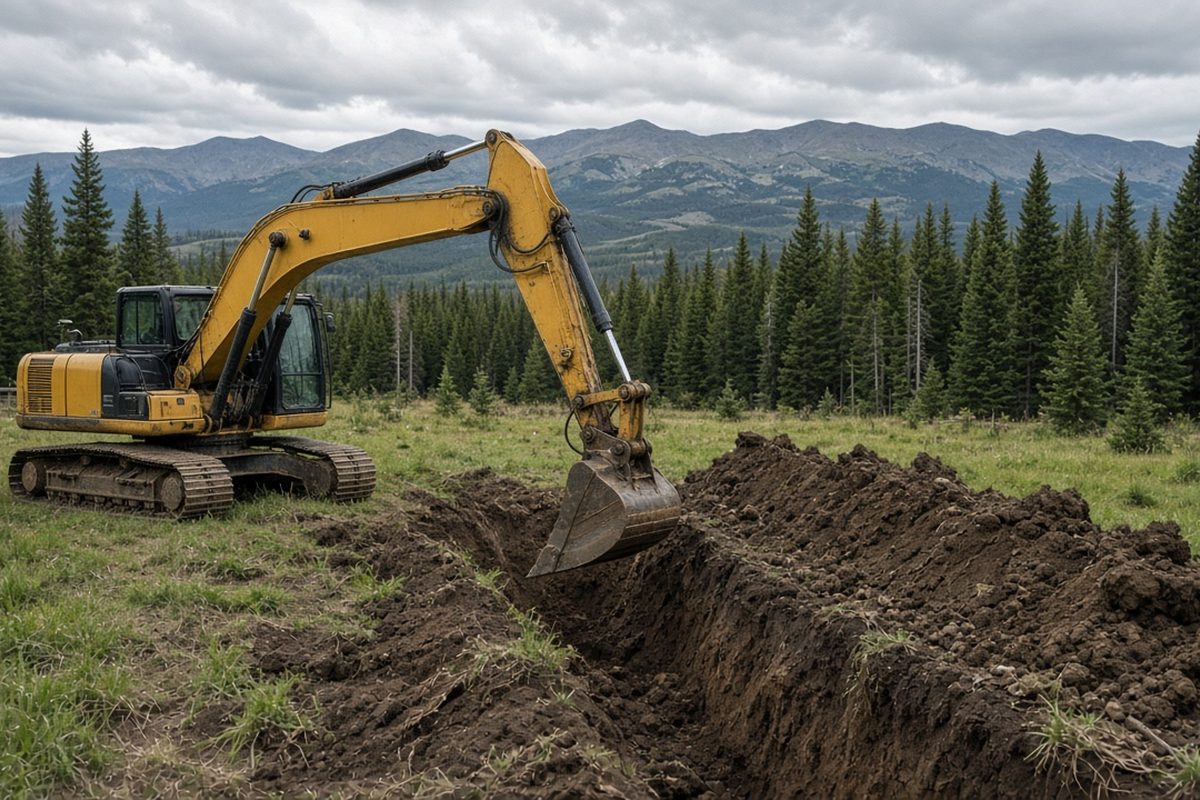
Common replacement triggers
- Sewage surfacing over the drain field
- Tank collapse, severe corrosion, or an undersized tank for current bedrooms
- Field that never recovered after pumping
- Unpermitted or undocumented system discovered during a sale or remodel
Call (406) 607-8740 with the town and what’s failing. Mark urgent if waste is in the house.

Replacement questions
When is a full replacement better than a repair?
A cracked lid or failed pump can be repaired. Surfacing sewage, a collapsed tank, an undersized field for today’s bedroom count, or a system that was never permitted usually means a full replacement under a new Flathead permit.
Do old grandfathered systems still need a Flathead permit to replace?
Yes. Replacing a failed system is treated as new construction for permitting. DEQ-4 standards and current Flathead rules apply even if the old tank sat for decades without a modern permit file.
Can the new system go in the same spot as the old one?
Sometimes. Setbacks, groundwater depth, and residual biomat in the old trenches can force a new drain-field area. A site evaluation decides whether the same footprint works.